Brake Inspection & Repair in Minneapolis: What Every Driver Needs to Know
If your car is squealing or grinding, or the brake pedal feels soft, that means your brakes need service now. Brake trouble is very common in Minneapolis, with its stop-and-go traffic, tough winters, and road salt corrosion. At DC Auto Care, we repair these common brake problems within 1 to 4 hours on the very same day. The bigger risk is waiting. Ignoring the early warning signs can turn a $150 pad replacement into a $400+ rotor job in a matter of weeks.
Minneapolis Is Genuinely Rough on Brakes, Here’s Why
We’re not just saying that to scare you into a service appointment. Minneapolis really does wear brakes down faster than most cities, and it comes down to three things.
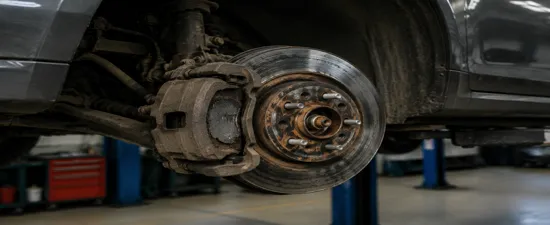
First, the salt: From November through March, roads get coated with this, and it doesn’t just melt ice; it eats through brake rotors, calipers, and hardware. We see corrosion damage here that mechanics in warmer states rarely deal with.
Second, the temperature swings: Metal expands and contracts with every freeze-thaw cycle. Do that hundreds of times a winter, and the brake hardware loosens, the lines and hoses weaken, and the calipers start sticking.
Third, the traffic: Stop-and-go on 35W and 494 constantly builds heat in your braking system. Heat warps rotors and chews through pads faster than highway cruising ever would.
Bottom line, if you’re driving in Minneapolis, you need to stay on top of your brakes more than the standard once-a-year advice suggests.
5 Warning Signs Your Brakes Need Attention
- Squealing when braking: Brake pads have a built-in metal wear indicator that squeals when pads get too thin. It’s a deliberate alarm, not random noise. According to the National Highway Traffic Safety Administration (NHTSA), brake failure contributes to tens of thousands of crashes annually, most of which are preventable with timely maintenance.
- Grinding sound: Grinding means the pad material is completely gone. Metal is now contacting your rotor with every stop, causing expensive damage fast. Act immediately.
- Soft or spongy pedal: A pedal that sinks too far before the car responds usually means air in the brake lines or deteriorated brake fluid. This is a safety issue, not a comfort one.
- Car pulling to one side: Drifting during braking usually points to a stuck caliper or uneven pad wear. The overworked side will wear out much faster.
- Vibration in the pedal or steering wheel: Pulsing during braking typically means warped rotors, common after repeated hard stops from highway speed.
What We Actually Check at DC Auto Care
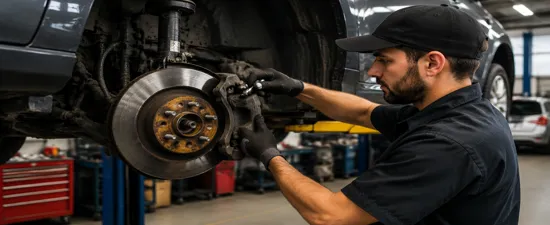
A lot of shops do a “brake inspection” by peeking through the wheel spokes to check pad thickness and call it a day. That’s not what we do. Our certified mechanics go through the whole system:
- Brake pads - anything below 3mm gets flagged for immediate replacement
- Rotors - checked for warping, scoring, and minimum safe thickness
- Calipers - tested for sticking, corrosion, and proper clamping
- Brake fluid - we test moisture content, not just eyeball the level
- ABS - full diagnostic scan to confirm it’ll actually engage when you need it
We show you exactly what we find before we recommend anything. You’ll never get a repair pushed on you without understanding why it’s needed. For a full breakdown of what repairs typically cost, visit our post: Brake repair cost in minneapolis.
What We Can Fix
- Brake pad replacement: We use OEM or top-tier aftermarket pads. Cheap pads are a false economy; they wear faster, perform worse under pressure, and can chew up your rotors in the process.
- Rotor resurfacing or replacement: If your rotors are worn but still have life in them, we resurface them. If they’re past it, we replace them in pairs so both sides break evenly.
- Caliper repair or replacement: A sticking caliper will destroy a fresh set of pads in weeks. We free them up, replace corroded hardware, or swap in new calipers when needed.
- Brake fluid flush: Old brake fluid absorbs moisture over time, lowering its boiling point and reducing braking performance. We recommend flushing every 2 years or 30,000 miles, sooner if you’re driving in Minnesota winters.
- ABS diagnosis and repair: We diagnose fault codes, replace bad sensors, and get your anti-lock system working properly again. In a Minnesota winter, functioning ABS isn’t optional.
View our complete auto services to see everything DC Auto Care handles.
Frequently Asked Questions
- Can I drive with squealing brakes? You can, but you’re on a countdown. Once the pad material is gone, the metal hits the rotor, and a $150 pad job turns into a $400+ repair fast. Book within the week.
- How long does brake repair take? Pad replacement takes 1 to 2 hours. Rotor or caliper work runs 2 to 4 hours. We’ll give you an honest estimate when you book, no surprises.
- How does Minnesota winter affect brakes? Road salt corrodes rotors and calipers faster than almost anything. Cold temperatures cause calipers to stick and mess with fluid performance. It’s why seasonal brake checks matter more here than in most states.
Book Your Brake Inspection at DC Auto Care
If you've noticed any of the warning signs above -or it's just been a while - don't sit on it. Small brake problems have a way of becoming big ones fast.
DC Auto Care serves Minneapolis drivers with straight talk, quality parts, and repairs done right the first time.
DC Auto Care
3001 Central Ave NE
Minneapolis, MN 55418
Contact us at: (612) 367-4055 or Mail us at:
service@dcautocarempls.com
or Book Online