
The roads in Minneapolis are hard on cars. Your car's steering and suspension system takes a lot of abuse just getting from the Northeast to Uptown. The freeze-thaw cycles that crack asphalt all winter long and the famous potholes that open up every spring on Central Ave, I-35W, and Franklin Ave make it even worse. If you've ever felt your steering wheel shake after hitting a pothole, heard a clunk when you went over railway tracks near St Anthony or seen your car pull to one side on I-94, your steering and suspension system is trying to tell you something.
This guide tells you everything you need to know, like how these systems work, how to spot warning signs early, how much repairs really cost in Minneapolis, and when it's safe to keep driving and when it's not. This information is useful for everyone, whether you drive a Toyota Camry, an F-150, or a Subaru that has been through seven Minnesota winters.
Quick Tip: Problems with the steering and suspension don't usually go away on their own. In Minneapolis, pothole damage, road salt corrosion, and significant changes in temperature wear out shocks, struts, ball joints, and tie rods faster than the national average. Finding problems early can save you hundreds or even thousands of dollars in repairs later on.
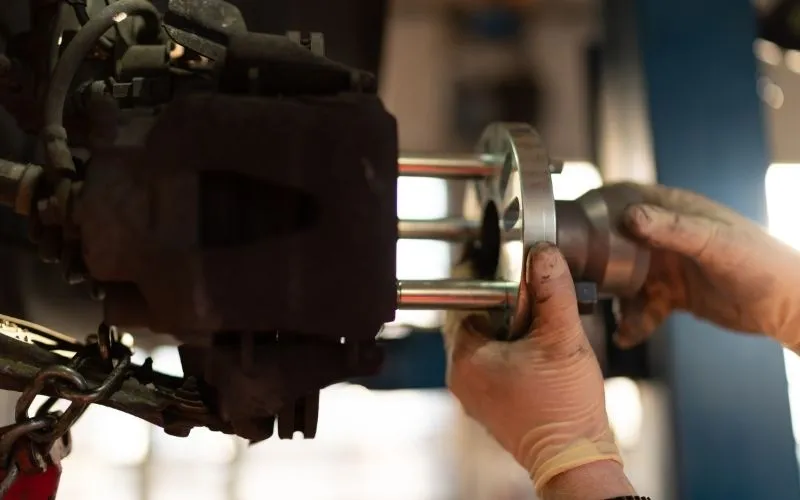
Most problems with steering and suspension don't show up all at once; they build up over time. Here are the nine most important signs to look for, especially after a bad winter in Minneapolis or a bad pothole encounter:
1. Your car pulls to one side when you drive.If your car drifts to the left or right when you let go of the wheel on a flat, straight road, the most likely causes are misaligned wheels, uneven tyre pressure, or a broken suspension part, such as a worn strut or a collapsed control arm bushing. In Minneapolis, this often happens after winter. Road salt speeds up the wear and tear on bushings, and freeze-thaw cycles change the alignment settings even on cars that haven't hit a single pothole.
2. The steering wheel shakes.If your steering wheel shakes or vibrates, especially on highways like I-35W and I-94, it usually means your tires are unbalanced, your tie rod ends are worn out, or your steering rack is broken. If the vibration gets worse when you go over a bump, it's a good sign that the suspension is involved.
3. Sounds like clunking, knocking, or squeaking when you go over bumpsWhen you go over the railroad tracks on Hennepin Ave or hit a pothole, the metal-on-metal clunking usually means that the ball joints are worn out, the strut mounts are failing, or the suspension hardware is loose. When you turn, squeaking sounds often mean that the bushings are dry or worn out or that the power steering fluid is low. Neither of these problems goes away on its own; they get worse and more expensive as parts wear out.
4. Too much bouncing after bumpsAfter a bump, a healthy suspension settles down quickly. If your car keeps bouncing or rocking for several cycles after going over a speed bump or pothole, it's likely that your shock absorbers or struts are worn out and can't dampen spring rebound anymore. This also makes it harder to stop, which is a real safety problem, especially on Minneapolis roads that are wet or icy.
5. Your car's nose dives when you hit the brakesIf the front of your car dips sharply forward when you hit the brakes, it means that your front struts are no longer able to control weight transfer. It will feel like you're lunging into the wheel. This symptom is most likely to show up when you stop at an intersection or go down a steep ramp.
6. Hard to steer or a stiff steering wheelWhen the steering wheel feels too heavy to turn, especially when you're driving slowly in a parking lot, it could mean that the power steering fluid is low, the power steering pump is failing, or the steering rack is broken. It's normal for a car to be a little stiff in the morning when it's cold in Minnesota. But if it stays that way after the car warms up, you should have it checked out.
7. Tires that wear out in strange or uneven waysIf your tires wear down faster on one side than on the other or develop a scalloped (cupped) pattern across the tread, it's a sure sign that your suspension is having problems. Scalloping means that a tyre is bouncing off the road over and over again instead of staying in contact, which is what happens when shocks or struts wear out. Don't just rotate the tyres and hope for the best if you see this; you need to fix the problem that caused it.
8. Your car leans or sags to one side.If one corner of your car is noticeably lower than the others when it is parked on level ground, the coil spring is probably broken or has collapsed. This happens a lot to cars that often carry heavy loads or have hit a lot of potholes hard. If your springs are broken, it's an emergency. Don't drive on them.
9. The steering wheel is off-centre when driving straight.Your car needs a wheel alignment if the steering wheel is off by 5 or 10 degrees to one side when you're driving straight. This can happen after hitting a big pothole or after replacing parts of the suspension without realigning the car. If you don't fix it, off-centre alignment speeds up tyre wear and puts uneven stress on steering parts.
Minneapolis Reality Check: A lot of drivers notice these signs after a long winter or during the spring pothole season, which is usually from February to April. If you've recently driven over a deep pothole and noticed any of the above signs, even small ones, make an appointment for an inspection. Once a part is damaged, hidden damage often gets worse very quickly.
One of the main reasons why suspensions fail suddenly in the Twin Cities is because of pothole damage. Our in-depth guide to suspension repair and pothole damage in Minneapolis explains exactly what happens to your suspension when you hit a deep pothole at high speed and how to check for damage right away.
Drivers in warmer climates don't have to deal with the problems that come with your suspension. Minneapolis is unique in how hard it is for these systems to work:
Potholes—The Clear ReasonMinneapolis and St. Paul consistently rank among the worst cities in the United States for pothole damage. The reason is geological and meteorological: asphalt contracts when temperatures drop below freezing and expands when temperatures rise. When water infiltrates small cracks during wet weather and then freezes, it expands the crack from the inside — forming the subsurface voids that eventually collapse into potholes. Minneapolis can see 50+ freeze-thaw cycles in a single winter, which is why February through April feels like navigating a lunar landscape on local streets.
A single high-speed pothole impact can bend a wheel, knock alignment out of spec, crack a strut, or snap a coil spring — all in a fraction of a second. Even lower-speed impacts can compress strut seals, damage bump stops, and dislodge bushing material that gradually leaks out over subsequent weeks.
Road Salt and CorrosionMinnesota applies road salt aggressively from November through March. While it keeps roads safer, it accelerates rust and corrosion on suspension components — particularly on steel springs, mounting hardware, ball joint housings, and sway bar links. Components that might last 10–12 years in a dry climate can fail in 5–7 years on Minneapolis vehicles. This is especially true if your vehicle lives on the street rather than in a garage, where there's no protection from the constant splash of brine.
Temperature ExtremesRubber bushings, which cushion the connection between metal suspension components, deteriorate faster with extreme temperature swings. Minneapolis regularly sees temperatures from -20°F in January to 95°F in August — a swing of over 100 degrees. That thermal cycling accelerates cracking and hardening in bushings, leading to clunking and imprecise handling even before the bushing fully fails.
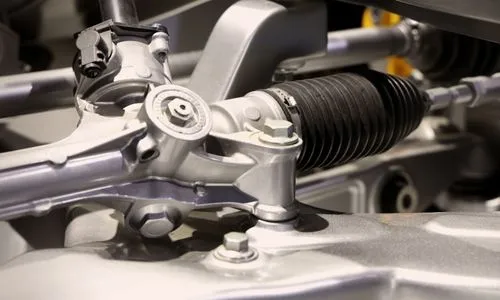
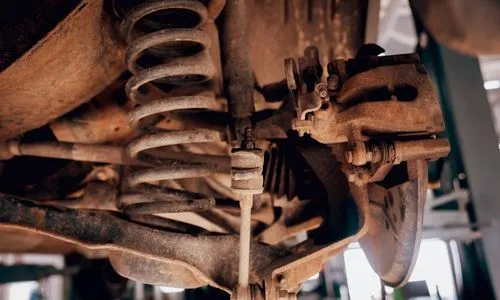
You don't need to be a mechanic to understand what these parts do and why they matter. Here's a plain-English breakdown of the components your technician is most likely to flag during an inspection:
| Component | What It Does | Common Symptom When Failing |
|---|---|---|
| Shock Absorbers | Control the bounce and rebound of the springs, keeping tires in contact with the road | Excessive bouncing, longer stopping distances |
| Struts | Structural component that combines shock absorber and spring support; part of the steering geometry | Clunking, nose-diving when braking, uneven tire wear |
| Coil Springs | Support the vehicle's weight; absorb initial impact from bumps | Vehicle sagging, bottoming out, harsh ride |
| Ball Joints | Pivot points that allow the wheel/hub assembly to move up and down and side to side | Clunking, wandering steering, uneven tire wear |
| Tie Rods (Inner & Outer) | Connect the steering rack to the wheels; transmit steering input | Loose or wandering steering, vibration, steering wheel play |
| Control Arms | Link the wheel hub to the vehicle frame; allow for vertical wheel movement | Knocking noise, pulling to one side |
| Bushings | Rubber/polyurethane cushions at suspension pivot points; absorb vibration | Squeaking, clunking, imprecise handling |
| Sway Bar Links | Connect the sway bar to the suspension to reduce body roll in corners | Clunking over bumps, excessive body lean in turns |
| Rack and Pinion / Steering Gear | Converts rotational steering wheel input into lateral wheel movement | Stiff steering, leaking fluid, loose/sloppy steering feel |
| Power Steering Pump | Provides hydraulic assistance to make steering effortless | Whining noise, heavy steering, fluid leaks |
Repair costs depend on your vehicle's make and model, whether you choose OEM or aftermarket parts, and whether you go to a dealership or an independent shop. Here's a realistic cost breakdown based on current market data:
| Repair / Service | Estimated Cost Range | Notes |
|---|---|---|
| Wheel Alignment (4-wheel) | $80 – $180 | Should always follow strut or suspension component replacement |
| Shock Absorber Replacement (pair) | $200 – $600 | Rear shocks are typically less expensive than front |
| Strut Replacement (front pair + alignment) | $600 – $1,400 | Luxury vehicles and AWD models trend higher |
| Complete Strut Assembly (all 4 + alignment) | $1,200 – $3,000+ | Recommended to replace in axle pairs minimum |
| Ball Joint Replacement (per side) | $200 – $500 | Often done alongside control arm work |
| Tie Rod Replacement (outer, per side) | $150 – $300 | Inner tie rods cost more due to additional labor |
| Control Arm Replacement | $250 – $600 | Often includes bushings and ball joint |
| Sway Bar Link Replacement | $100 – $250 | One of the less expensive suspension repairs |
| Rack and Pinion Replacement | $600 – $1,800 | Complex job; prices vary widely by vehicle |
| Power Steering Pump Replacement | $300 – $800 | Hydraulic systems; electric power steering is less common to fail |
| Coil Spring Replacement (pair) | $400 – $900 | Labor intensive; often done with struts |
Pro Tip: Data from the industry shows that the average cost to replace a pair of shocks or struts is between $500 and $2,500, depending on the vehicle and parts that need to be replaced. Plan on spending $1,000 to $5,000 for all four corners. Independent shops like DC Auto Care usually charge 25% to 40% less than dealerships for the same quality of repair. Before you agree to any work, always ask for a written estimate.
If you need to have your struts, tie rods, or ball joints replaced, always make sure to schedule a wheel alignment appointment at the same time. Changing these parts changes the shape of your car, and driving without getting it aligned again will wear out your tires faster and make the repair less useful.
Sometimes, when you fix the suspension, you also have to deal with problems in the fluid system, like leaks in the power steering fluid or other fluid loss under the hood. If you've seen spots on your driveway or noticed that the fluid levels have dropped, check out our guide to the cost of fixing a transmission leak in Minneapolis to learn how a local shop finds and fixes fluid leaks.
You can't completely avoid potholes in Minneapolis (though you can try), but there are real things you can do to make your steering and suspension system last longer and find problems before they cost a lot of money:
Every 12 months or after a hard hit, have your wheels aligned.The best thing you can do to keep your car in good shape is to have it checked for alignment once a year or after hitting a big pothole or curb. Proper alignment keeps your tires from wearing unevenly and keeps stress from building up on steering and suspension parts. Many stores offer alignment checks for less than $20, which is different from the actual alignment service.
Check the pressure in your tires every month.Tires that aren't fully inflated transfer more force to the suspension and make handling less precise. Tire pressure changes a lot in Minneapolis, where temperatures change a lot from season to season. Check the pressure every month and after big temperature changes. Your tires lose about 1 PSI for every 10°F drop in temperature.
During the winter, wash the undercarriage often.Steel suspension parts don't like road salt. Cleaning the undercarriage every two to three weeks in the winter and thoroughly after the last snow of the season slows corrosion on springs, control arm hardware, and sway bar parts a lot. Many car washes in Minneapolis offer an undercarriage rinse as an extra service.
Don't Ignore New Sounds.Suspension noises almost never go away on their own. A little clunk today can turn into a loud clunk in two months and a costly multi-part repair in six months. If you hear something new after winter or after a rough patch, get it checked out right away so the repair isn't too big.
Check the shocks and struts every 50,000 miles.Shocks and struts that have been driven in Minnesota for 50,000 to 60,000 miles are getting close to the point where they will start to perform worse, even if they don't feel much worse. You can find out if they're still doing their job well by doing a quick bounce test and looking at them during your next oil change.
To see all the services that DC Auto Care offers, such as alignment, strut replacement, and seasonal suspension checks, go to our full auto repair services page.
The National Highway Traffic Safety Administration (NHTSA) publishes information on vehicle safety parts and recalls. This is a good place to look if you're worried that a known problem might affect your make and model.
The most important thing is to not wait. Shocks that are worn out don't just make the ride rougher; they also make it harder to stop. When a ball joint breaks, it doesn't just make a noise; it can also make a wheel give out while you're turning. Not only is it annoying when a car pulls to the right, but it also wears out a $200 tire in 8,000 miles instead of 40,000.
Want to ask something or get a quote? Call (612) 367-4055 or send an email to DCAUTOCAREMPLS@GMAIL.COM. You can get all our service options and updates by going to our website DC Auto Care or Facebook.